Thursday, September 10, 2015

Dementia Is Not A Disease For The Old


Dementia is a prolonged or progressive syndrome that results in deterioration in cognitive function. The ability to process thought is greatly severed beyond the expected in cases of normal aging. Dementia affects language, calculation, thinking, orientation, memory, comprehension, judgment, and learning capacity. It never affects one’s consciousness. Deterioration in emotional regulation, motivation or social behavior mostly accompanies or precedes the impairment in cognitive function.

A variety of diseases and injuries cause dementia. They primarily or sometimes secondarily affect the brain, with perfect examples being the Alzheimer’s illness or stroke. It is not only those who suffer from the condition that bear the brunt of its effects but also the caregivers and families of those living with the condition. The responsibility and stress of taking care of a friend or loved one who is suffering from the dementia can be great. It has been identified as an important cause of disability and dependency especially among older people across the globe. It impacts severe physical, physiological, social and economic ramifications on those affected. 

Dementia comes in different forms or causes. There is no distinct margin between the various forms of dementia and mixed forms of the problem do co-exist. The most common form of dementia is Alzheimer’s disease that has been identified to contribute to 60-70% of the cases. Some other forms of dementia include several conditions that cause frontotemporal dementia, vascular dementia, and dementia with Lewy bodies. The Lewy bodies are strange protein aggregates that usually develop inside nerve cells. 

Though dementia is commonly associated with seniors, it sometimes affects people with not so advanced ages. Though rare, several cases of people suffering from the condition while still young have been identified. Stan Mikita, a retired professional ice hockey player, has been well-known to suffer dementia with Lewy bodies. The Slovak-born Canadian is regarded as one of the best players of the game in the 1960s. His memory and cognitive function are known to have been slowly waning for years since he was relatively young. Once old age caught up with him, his cognitive function rapidly deteriorated and a few months later, his diagnosis of Lewy body dementia was made public.
It is suspected that Mikita's problems could have started way back during his playing days due to the repeated concussions the players suffer during gameplay. Science has it that repeated head trauma can result in a progressive neurodegenerative disease known as chronic traumatic encephalopathy (CTE). The neurodegeneration eventually results in dementia. 
Lewy body dementia severely disrupts movement, thinking, sleep, movement, and behavior. Hallucinations and symptoms of Parkinson’s disease may accompany it. Mikita’s family has no objection to giving out his brain for a postmortem on his demise to pave the way for further scientific research on the disease. An illness that could have started way back during his playing days, yet people so often mistake it as a disease of those who are elderly.

Monday, August 24, 2015

The Progression of Alzheimer's Disease and the Progression of Daily Home Care Needs

Most have heard the 'frog in a pot of water' theory. If a frog is put in a pot of hot water, it will jump out. If it is put in room temperature water and then the pot is heated, it adjusts until it is too late. This same idea can apply to adult children adjusting their daily care of elderly parents with Alzheimer's disease. Cognitive and physical decline associated with the disease may improve for a time with currently available treatments and medications, but the progression curve follows a rate of decline. The next step in daily care of elderly parents is sometimes delayed because adult children providing the care are taking on extra tasks a little at a time, not noticing the risks of trying to do it all.

Typical adult children caregiver scenarios often begin with medical setbacks such as slips or falls. They begin to take over a few tasks to help. Often, only one parent is affected by Alzheimer's or another condition that leads to cognitive and physical impairments that worsen over time. The unaffected spouse may suddenly be overwhelmed with new care tasks that puts their own health and safety at risk. Care often begins in stages with tasks, such as making sure the home is kept clean, helping with budgeting and making sure bills are paid on time. Newly prescribed medications may also require daily reminders.

At some point driving skills of those with Alzheimer's degrades to the point where they are no longer safe drivers. This stage often results in significant conflict due to the desire to maintain the freedom that driving brings and the adult children knowing that safety of parents with Alzheimer's and others on the road takes precedence. Transportation tasks are then taken over by children who are providing elderly parent care. This may also be the time adult children of parents with Alzheimer's realize their elderly parents may need more care than they can adequately provide, and the parents then fear commitment to a nursing facility.


The progression of Alzheimer's at some point in the future may require nursing care. However, that could be quite a long time from when daily home care is a necessity. The disease advances in stages and so should the amount of care given to parents who have Alzheimer's. Daily home care from Visiting Angels in Las Vegas is the next logical step when caring for elderly parents becomes too much for the adult children, but a point where assisted living or nursing home care is needed has not been reached yet.

Visiting Angels can take over many of the daily tasks that need completed and also provide social interaction and assistance with memory loss care, assistance with walking or completion of exercise routines, meal preparation, light housekeeping, running errands, transportation to appointments and even overnight care where the caregiver stays awake to offer help as needed. Probably the greatest service is one of companionship where the elderly parent knows that someone is there for conversation and is also ready to help. Daily home care services provided by Visiting Angels in Las Vegas eases the burden and removes the stress of elderly parent care.

Monday, August 10, 2015

Caring for a Loved One with Mobility Issues

When your loved one’s mobility decreases, he or she may suddenly need help doing a lot of the things that are necessary for daily living. The thought of lifting and assisting your loved one may be daunting, but it will become easier with time. Here are some tips for caring for a loved one with reduced mobility.

Respecting Your Loved One’s Independence
A decrease in mobility is a major loss for most people. Your loved one wants and needs to have as much control over his or her life as possible. Before you attempt to assist your loved one, be careful to explain what has to be done and why.

Staying Safe During Transfers
Transfers can be dangerous. You can make the process much safer by planning ahead, waiting for help if your loved one is too heavy, and following safety guidelines. These include keeping your legs slightly apart and your back straight while holding your loved one near to own body during the move, turning your whole body rather than just you waist, and wearing skid-proof shoes. To initiate the transfer, face your loved one while gently gripping beneath each arm. If you must carry your loved one, put one arm around him or her and under an armpit, then put the other under the knees.

Using a Wheelchair
A wheelchair can allow your loved one to continue many activities he or she loves, such as visiting, shopping, enjoying the outdoors, and attending religious services. However, getting into and out of the wheelchair must be done safely.

Before transferring your loved one to a wheelchair, adjust the height so that the rider’s thighs are at a 90 degree angle to his or her torso. Place a pad in the seat for comfort. Before you assist your loved one into the chair, lock the brakes and adjust the footrests to the side. Then use the general safety guidelines for transfers to help your loved one into the chair. Once your loved one is in the chair, move his or her feet apart to about shoulder width.

Always turn the chair backwards before going up stairs or over curbs or bumps. Whenever possible, make sure your loved one can see where you are going. Casually mention that you are approaching bumps, turns, stairs, ramps, or lifts. When it is time to get back into bed, use the safety guidelines for transfers again, this time gently lifting your loved one from the wheelchair.

Reach out for Help
Even the most dedicated caregiver needs help now and then. Enlist other family members to help care for your loved ones when needed, or ask for a helping hand from a professional such as Visiting Angels in Las Vegas.

Thursday, July 9, 2015

Alzheimer’s Hostess Personality

In certain situations, older adults suffering from Alzheimer’s can display an uncanny ability to function normally. One of the most common situations where seniors with Alzheimer’s exhibit normal functionality is during visits to the doctor. The ability to conceal characteristics of dementia for a given duration is referred to as a Hostess Personality.


The emergence of a Hostess Personality has sometimes been accredited to fear and denial. If a person with Alzheimer’s is afraid of the repercussions of a doctor’s appointment, they will do their best to appear perfectly normal when they are with the doctor.

The Selective Engagement Theory

As a person gets older, their energy levels reduce, especially if they have a condition like Alzheimer’s. The reduction forces them to choose the activities that merit the use of their restricted personal resources. Any activities that are deemed relevant are undertaken while those of less importance are ignored.

The carrying out of complex mental tasks is more taxing for seniors with Alzheimer’s. They have to work harder to finish an activity and need a longer recovery time once they are done. The result is that they usually tend to sleep a lot after any mentally strenuous task.

According to the selective engagement theory, the elderly are highly motivated to overcome all their cognitive shortcomings in any situation that they consider to be of importance to them. A visit to the doctor is usually considered very important because, to someone with their condition, it could determine whether they can retain their independence or not. 

Dealing With a Hostess Personality

Sometimes, taking care of a person with a Hostess Personality can be a daunting task. If you take them to a doctor or report their behavior to family members, they will not display the symptoms that you ‘claim’ that they are exhibiting. Your credibility with the doctor or relatives may be put in doubt, leading to frustration.

The following methods can be used to deal with a Hostess Personality:

• Talk to your elderly relative and try to convince them that you have their best interests at heart. Assure them that revealing their affliction is not an attempt to get rid of them and that it is for their own good.
• Inform the doctor about what is happening privately. The doctor will know the best way to deal with the situation.

Although dealing with a relative who has Alzheimer’s can be difficult, especially if they exhibit a Hostess Personality, showing great care and devotion goes a long way in improving their condition. 

Taking care of an Alzheimer’s patient is usually a round-the-clock task. If you are not always available to be with them, hiring someone to take care of them in the familiar comfort of your home is the next best option.

Caring For A Loved One With Memory Loss

Even though many people do not mind helping their loved one, being a caregiver can be incredibly stressful. If the person is suffering from memory loss, then caring for him or her is even more difficult. Fortunately, there are many things that caregivers can do that will make it easier for them to care for their loved ones. Below is a list of tips that will help:

Get a Medical Diagnosis

Anybody who is suffering from memory loss should be examined by a physician. In many cases, memory loss is a side effect of a medication. It can also be a sign of Alzheimer's disease or dementia. Keep in mind that there are many new medications that can treat Alzheimer's disease and dementia in their early stages. That is why it is essential for people who are suffering memory loss to see a physician.

Create a Care Plan

After your loved one has been examined and received a diagnosis, the next thing that you will want to do is outline a care plan. Take a person's short and long-term needs into consideration when you are creating a care plan. You may also want to ask a medical professional to help you create a care plan. Keep in mind that the care plan is likely to change.

Educate Yourself

It will be a lot easier for you to care for someone who has Alzheimer's disease or Dementia if you educate yourself about the condition. Talk to healthcare providers about the condition. Read brochures and books. You can also talk to other people who are caring for someone who has Alzheimer's disease or Dementia.

Safety-Proof the Home

There are a number of things that you can do to safety proof your home. You need to make sure that medications, household cleaners, knives, sharp objects and sewing needles are kept out of reach of your loved one. You will also need to adjust the temperature on your water heater. Lowering the temperature can prevent a person's chances of suffering a scalding burn.

Additionally, you may want to consider having grab bars installed in the bathtub. This will make it easier for your loved one to get in and out of the bathtub.

Take Some Time to Yourself

It is easy for caregivers to get overwhelmed. That is why they are more prone to high blood pressure and depression. You have to take time for yourself. Try to exercise every day. Include plenty of nutritious foods in your diet. Make sure that you get an adequate amount of sleep. Taking care of yourself will help prevent burnout.

You may also want to consider getting a professional caregiver to help your loved one. You can contact Visiting Angels of Las Vegas if you are interested in getting a professional caregiver to help you take care of your loved one.

Monday, June 22, 2015

Health And Independence Goals For The Elderly

As life expectancy increases, the issue of maintaining health and independence has become a priority, especially among the aging baby boomer population. Most seniors wish to remain at home and independent throughout their final years. Medical and technological advances make this more possible now than ever before. The following are some tips for seniors to ensure they remain active and healthy during their golden years.

1. Create a secure environment.

Safety should be at the forefront of every senior’s mind. Falls are the most common reason seniors lose their independence. Almost 500,000 people over age 65 are hospitalized each year due to fall-related injuries. Sadly, these injuries often lead to permanent disability and even death. The good news is falls are entirely preventable. Seniors and their families should conduct a thorough safety review of the home. The review should take into account the senior’s specific health, cognitive, and mobility related issues. Remember to reassess safety whenever there is a change in physical or mental status.

2. Embrace technology.

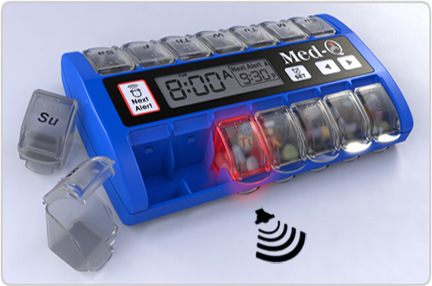
One of the most valuable pieces of technology for any senior is an emergency alert device. These devices instantly connect a person to emergency services with the touch of a button in the event of a fall or other accident. Assistive devices are available to make it easier for seniors to perform daily activities such as dressing, cooking, and bathing. Easy to operate electronic pill boxes are even available to remind seniors to take medication properly. Your doctor, medical supply company, or home health agency can help you find the right assistive devices for your situation.

3. Set healthcare goals.

The act of setting a goal often has a positive impact on a person’s overall outlook. Setting goals provides a sense of empowerment and control over one’s circumstances. Setting healthcare goals should be a collaborative effort involving the senior, their family, and the doctor. The goals should not try to fix everything at once. The goals should involve one or two specific steps the senior can take to improve their overall quality of life. For example, the doctor may advise the senior to increase exercise. The senior may not care about exercise or losing weight but may desire to remain in the home to be with a beloved dog. You can use the emotional connection to bring the two goals together by encouraging the senior to take more frequent walks with the dog.

Friday, June 19, 2015

Adapting Your Home On a Budget for Care of Senior Parents In Las Vegas

When the subject of elderly parents living with their adult children comes up, an idyllic scene of the old TV show "The Walton's" might come to mind where three generations lived in one big farmhouse. However, reality is quite different from a TV show. Today's average home is smaller, and adult children often have spouses, children and pets in homes where a parent or parents might be moving in. Regardless of whether the situation is temporary or permanent, caused by financial constraints or insurance coverage or just because of a debt of love, the change can be made much easier and safer by completing some simple home adaptations.

Common Needs In Senior Home Care

Compromised strength, range of motion and balance are the fundamentals considered when adapting homes for their care. Compromised cognitive abilities may also apply. The degree of severity differs for each person needing care, but typically adaptive needs are similar. The most dangerous room in homes for elders has always been the bathroom. Slips and falls that cause serious injury mostly occur there. Thresholds transitioning from one floor surface to another, from one room to another and from indoors to outdoors are another high hazard area. Burns while preparing food, navigating stairs and tripping over throw rugs, objects left on the floor and furniture edges are also common. Adaptive equipment minimizes injury potential.

Examples of Easy Home Adaptations to Enhance Senior Care

The first changes should be in the bathroom. Adding shower/tub chairs, elevated toilet seats and non-slip surfaces to floors, tubs and showers is a must. Most of these devices are available in practically any department store pharmacy at a low cost with no professional home renovations being required. Thresholds can be made safely navigable by walkers and wheelchairs by installing threshold ramps available at home supply centers. The rubber ones are available in different heights, and installation only involves placing them at the door like a door mat. Telescoping grab handles make it easier for seniors to retrieve light objects that have fallen onto the floor or are stored in overhead cabinets. Having favorite microwaveable foods always available helps to prevent burns and potential fires from stove cooking.

Caregiver Training Is Part of Home Adaptation

All of the best devices that aid with adult children providing care to elderly parents cannot compare to proper training. An example is patient lifts available in most care facilities. They are quite expensive but make it easy to lift the full weight of a person. However, there are proper lifting methods that make it much easier to do routine lifts of seniors who have difficulty standing. Knowledge of proper lifting procedures takes the strain off of caregivers and reduces the risk of injury for both seniors and caregivers. Training on methods such as this are available but may require asking medical professionals involved in senior care for advice on how to obtain it.

It would be nice if every home where seniors are cared for could be adapted using the latest technologies and equipment, but the reality is that families are most often under the strain of compromising on space and costs. Still, a little forethought and asking for help from available professionals can make the adaptation of a home to provide safe senior home care much easier, even on the tightest of budgets.